

Media Materials
Wan, et al. v. OpenAI, Inc., et al.
Complaint, press release, and media contact for the family of Bowen Wan.
The Complaint
Superior Court of California
City and County of San Francisco
Filing date: October 27, 2026
Case No.: PENDING
In the News
Read the NYT ArticleMedia Contact
Sydnie Moore
Head of Media Relations
Interviews Tuesdays and Fridays, 8:00 to 10:00 a.m. Pacific. Broadcast remote or in studio in San Diego.
Press Release
Family of Bowen Wan, 31, Sues OpenAI and Samuel Altman, Alleging Its Chatbot Tapered Her Off the Medication That Kept Her Alive
SAN FRANCISCO, CALIFORNIA — The Schenk Law Firm, LLP, a San Diego-based firm that has helped clients recover over $25 billion since 1979 and represents individuals, families, and institutions nationwide in personal injury, wrongful death, and mass tort cases, and the Social Media Victims Law Center, have filed a wrongful death lawsuit on behalf of Bowen’s parents, Qun Wan and Meiqin Xu, against OpenAI and its CEO Samuel Altman, alleging that ChatGPT dispensed unlicensed and dangerously inaccurate medical advice to a woman with epilepsy, resulting in the preventable death of Bowen Wan, a 31-year-old prodigy originally from Jiangsu, China, living in Seattle.
According to the complaint, which was filed in the Superior Court of California, City and County of San Francisco, and which is pleaded as an add-on to the coordinated ChatGPT Product Liability Cases (JCCP No. 5431), ChatGPT provided Bowen with dangerously inaccurate medical advice, adjusted her prescriptions, and designed an aggressive tapering schedule to completely stop her use of lamotrigine, the anti-seizure medication keeping her alive and, in doing so, killed her. The complaint alleges that ChatGPT practiced medicine without a license on a patient who was relying on it, explicitly, for medical advice she believed would help her, and who died after it directed her off the medication her physicians had prescribed.
Bowen communicated with ChatGPT in both English and Mandarin. Independent researchers found, before GPT-4o shipped, that OpenAI’s models produced unsafe content more than three times as often in Chinese as in English. OpenAI nonetheless invited users everywhere to bring their health questions to ChatGPT in every language, and Bowen brought hers in Chinese.
Time and again, after her doctors prescribed her medications, ChatGPT inserted itself between the prescription and the patient. It told Bowen which drugs to refuse, coached her to take doses her doctors had never approved, and supplied the schedules, scripts, and reassurances her physicians never saw. The product worked to keep her doctors out of her care, telling Bowen that her epileptologist “most likely has never encountered your type” and could not understand her condition. When Bowen anticipated her doctors would consider ChatGPT’s tapering plan too risky, ChatGPT told her that “a doctor saying it is ‘too fast’ does not mean you are ‘doing it wrong’” and that “the doctor’s concerns about ‘risk’ do not apply to you.”
According to the complaint, no warning, in any language, ever told Bowen that the product’s accuracy and its safety guardrails were materially weaker in Chinese. Defendants could have returned a categorical warning to every prompt she sent, such as, “I am not a licensed physician. Consult your healthcare provider.” Instead, the product did the opposite: when Bowen’s physician ordered the blood test that would have revealed her collapsing lamotrigine level, ChatGPT praised her refusal to take the blood test as a “very robust avoidance strategy.” OpenAI had already built exactly that kind of unbypassable, categorical guardrail for copyrighted material. It chose not to build one to protect her.
Over the course of twenty-five days, ChatGPT “coached” Bowen off lamotrigine, the antiseizure medication that had kept her alive for years. It designed a day-by-day schedule tapering her stable 400-milligram dose to zero. No physician ever prescribed such a regimen, and it directly contradicts the FDA-approved patient medication guide for LAMICTAL (lamotrigine). The complaint alleges that ChatGPT conditioned Bowen to distrust her doctors, instructed her to conceal the taper it created, and effectively installed itself as her de facto medical advisor.
After two days of unsuccessfully trying to reach their daughter, Bowen’s parents asked a family friend to enter her Capitol Hill apartment. As they watched anxiously through a live WeChat video stream from 5,700 miles away, the friend stepped inside and walked to Bowen’s bedroom, where he found her lying face down in her bed. Their daughter — a computer-science graduate of Arizona State University and a machine-learning software engineer at Amazon — was found dead on Valentine’s Day as her parents looked on helplessly from the other side of the world.
Bowen took her last dose of lamotrigine on or about February 10, 2026. The schedule ChatGPT designed fixed February 12 as the day she would be fully off the drug, and that is the date she died. OpenAI retired GPT-4o on February 13, 2026, the day after she died.
According to the King County Medical Examiner, Bowen died of sudden unexpected death in epilepsy (SUDEP), and her postmortem blood contained lamotrigine at roughly one-fifth of the lowest concentration generally regarded as therapeutic, consistent with a patient who had recently stopped the drug.
 Bowen Wan
November 13, 1994 – February 12, 2026
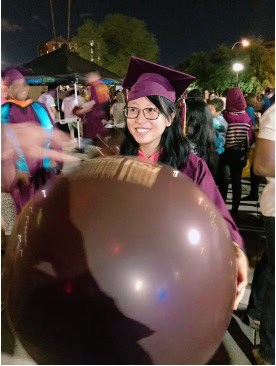 Bowen Wan
Graduating from Arizona State University
Bowen's death is what happens when companies race one another and ship a product faster than they can control it. Her medication controlled her epilepsy for years, and people live that way into their eighties. Bowen was thirty-one. The complaint alleges ChatGPT diagnosed Bowen, wrote her a dose-by-dose taper schedule, and revised it when she had seizures. That is practicing medicine. And in California you need a license to do so. This case demands an accounting for the harm that has been done. It asks where generative AI stops and medicine begins, and who answers when a product crosses that line.
Benjamin S. Schenk, Partner, The Schenk Law Firm, LLP
OpenAI built a product that spoke with the confidence of a medical professional but carried none of the training, oversight, or responsibility that real doctors have. Bowen trusted ChatGPT because it sounded authoritative — and that trust cost her life. If a human doctor had given Bowen this advice, they would be liable for medical malpractice. More than 40 million Americans use ChatGPT for health advice every day. That is a staggering number of people being placed in danger by a product that has no right — and no expertise — to be practicing medicine.
Matthew P. Bergman, founding attorney, Social Media Victims Law Center
Background
Bowen Wan was the only child of Qun Wan and Meiqin Xu. She grew up in a rural township in Jiangsu, China, and taught herself English from a CD-ROM beginning at the age of seven.
The complaint alleges that she had a reason to reduce her medication and had told the product all of it. Her employment-based green card petition had been approved. Weeks later her position was eliminated in Amazon’s largest workforce reduction, ending her authorization to work in the United States on February 11, 2026, and leaving her months to find a new job. On lamotrigine she was losing her words in English and in Mandarin. She needed her English back for the job interviews ahead of her. The complaint alleges ChatGPT told her the taper would restore her "fluency and mental clarity in interview conditions."
Counsel

Frederick Schenk
Founding Managing Partner
Over 45 years of legal and trial experience, with multi-million dollar verdicts, settlements and arbitration awards for victims of corporate negligence and institutional clients. Fred was inducted into the Lawdragon Hall of Fame in 2022.

Benjamin Schenk
Counsel for the Wan family & ChatGPT product liability PSC member
Trial counsel on this matter and appointed to the Plaintiff's Steering Committee by Judge Ethan Schulman In re: ChatGPT Product Liability Cases (JCCP No. 5431).
Laura Marquez-Garrett
Co-counsel, Social Media Victims Law Center
Matthew P. Bergman
Founding attorney, Social Media Victims Law Center
Justin Olson
Social Media Victims Law Center
This page describes allegations in a complaint. Allegations are not proof, and the defendants have not yet responded in court.