


Key Takeaways
- A fume event is a sudden in-flight incident where contaminated bleed air enters the cabin, usually from engine oil or hydraulic fluid.
- There is no official FAA fume event definition, which is one reason many incidents go unreported.
- Most fume events happen because of worn engine seals on aircraft that use bleed air systems.
- Typical signs include a “dirty socks” or burnt oil smell followed by dizziness, headache, or eye irritation.
- Anyone exposed should document the event, seek medical evaluation, and learn their options before airline insurers contact them.
Fume Event Definition: What It Means
A fume event is a sudden in-flight incident where contaminated air (usually vaporized jet engine oil or hydraulic fluid) enters the cabin or cockpit through the bleed air system. Passengers and crew typically notice a chemical odor followed by symptoms like dizziness or eye irritation. This is the working fume event definition commonly used by aviation unions, researchers, and medical professionals, but not by the FAA.
The Official Definition Problem
The FAA itself states on its Cabin Air Quality page that it “does not have a definition for a fume event,” relying instead on Service Difficulty Reports filed by airlines when smoke, vapor, or noxious odors enter the cabin. That gap matters. Without an agreed fume event definition in federal rules, airlines can log incidents as routine odor complaints, which keeps the true frequency out of public view and out of most news coverage.
How Fume Events Differ From Normal Cabin Odors
Not every in-flight smell is a fume event. Galley odors, lavatory issues, and passenger perfume can all produce unpleasant cabin air. A true fume event airplane incident involves vaporized engine oil or hydraulic fluid and usually comes with a distinctive “dirty socks,” “wet dog,” or nail-polish smell, often accompanied by haze and physical symptoms within minutes. That pattern, not the intensity of the smell alone, is what distinguishes a fume event from ordinary cabin nuisance.
How Does a Fume Event on an Airplane Actually Happen?
An airplane fume event happens in three stages: the bleed air system draws air from the engine, a seal or seal-adjacent part fails, and the contaminated air enters the cabin within seconds.
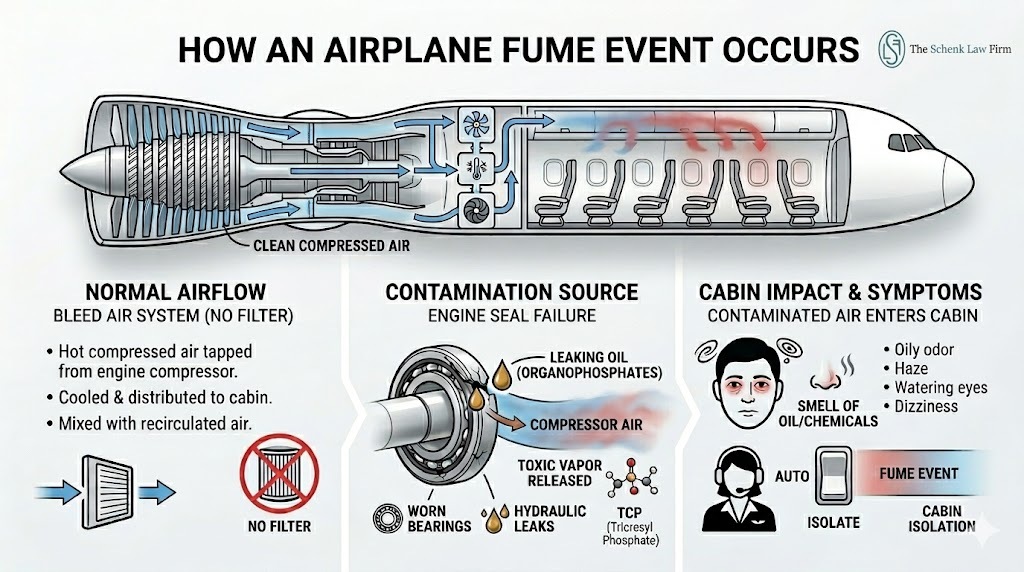
Step 1: The Bleed Air System Circulates Cabin Air
Nearly every commercial jet except the Boeing 787 pressurizes its cabin with bleed air, meaning hot compressed air tapped from the engine compressor stage upstream of the combustion. The air is cooled, mixed with recirculated cabin air, and piped into the ventilation system. There is no filter between the engine compressor and the air you breathe.
Step 2: Engine Seal Failure Releases Contaminants
Oil seals inside the engine are the single most common source of toxic fumes on planes. When a seal wears down, microscopic amounts of jet engine oil leak past it into the compressor stage. Overfilled auxiliary power units, worn bearings, and hydraulic leaks introduce phosphate-ester vapor into the same airstream. Because jet oil contains the neurotoxic organophosphate tricresyl phosphate (TCP), specifically the tri-ortho-cresyl phosphate (ToCP) isomer, the resulting fumes are chemically active even at low concentrations.
Step 3: Contaminated Air Enters the Cabin
Once oil vapor enters the bleed air stream, it reaches the ventilation system within seconds. Passengers typically smell a chemical or oily odor first, followed by haze, watering eyes, and dizziness. Some fume event airplane incidents are brief. Others persist until the crew isolates the affected bleed air source or diverts the aircraft.
What Happens During a Fume Event in an Aircraft?
During a fume event, passengers and crew first notice sensory signals (smell, haze) and then physical symptoms. Recognizing both is the foundation for medical care later.
Smell of Oil, Smoke, or Chemical Odors
Flight crews describe fume events as smelling like “dirty socks,” “wet dog,” burnt rubber, or nail polish, consistent with vaporized jet engine oil. A subset of events also produce visible smoke or haze, sometimes thick enough to obscure the cabin.
Cabin Air Contamination During Flight
As toxic fumes in airplanes fill the cabin, organophosphate concentrations rise quickly because modern aircraft recirculate roughly half of cabin air. Pilots don oxygen masks in a confirmed fume event; cabin crew may put on smoke hoods. Passengers have no comparable equipment, which is why passenger exposure can be heavier than crew exposure during the same incident.
Immediate Effects on Passengers and Crew
Within minutes of exposure to toxic fumes on planes, people onboard often report dizziness, headache, nausea, eye and throat irritation, confusion, and tingling. Pilots in severe events have reported impaired judgment, which is why fume events are treated as flight-safety emergencies. A Los Angeles Times review of NASA safety reports identified 362 voluntarily reported fume events from 2018 through 2019, with roughly 400 crew and passengers receiving medical attention.
Short-Term vs. Long-Term Health Effects of an Aircraft Fume Event
The health effects of an aircraft fume event fall into two categories: immediate symptoms during and after the flight, and chronic effects that can appear weeks or years later.
Immediate Effects (Hours)
Headaches, nausea, eye irritation, dizziness, and cognitive slowing are the hallmark immediate effects. Some passengers and crew also experience chest tightness, tremor, and word-finding difficulty. These symptoms often persist for one to seven days, which is why anyone exposed should seek medical evaluation within 48 hours.
Long-Term Effects (Weeks to Years)
Chronic exposure during repeated airplane fume event incidents has been linked to lasting neurological damage: memory loss, tremors, mood disorders, sleep disruption, and chemical sensitivity. A 2025 peer-reviewed aerospace study of pilot cognitive performance found deficits resembling those seen in groups exposed to organophosphate pesticides.
Fume Events vs. Toxic Cabin Air
Fume events and toxic cabin air describe different exposure patterns. The table below explains how they differ.
| Factor | Fume Event | Toxic Cabin Air |
|---|---|---|
| Nature | Sudden, identifiable incident | Ongoing, low-level exposure |
| Duration | Short-term (minutes to hours) | Repeated across many flights |
| Typical Risk | Immediate symptoms, acute injury | Long-term neurological and respiratory harm |
Who Is Legally Responsible for a Fume Event on a Plane?
Responsibility for a fume event can rest with three parties. The airline may be responsible for maintenance or crew response, the aircraft manufacturer may be responsible for the bleed air design itself, and the engine manufacturer may be responsible for faulty seals or bearings. Many legal claims name all three. The Boeing 787 is the only commercial jet without a bleed air cabin pressurization system, which is why a “safer alternative design” argument is increasingly common in cases against manufacturers.
Can a Fume Event Lead to a Lawsuit?
Yes, under certain conditions. Fume events can support a civil lawsuit when there is a documented exposure (flight records or maintenance reports), a diagnosed injury, and medical evidence linking the two. Claims after an aircraft fume event often combine product liability (against the manufacturer) with negligence (against the airline). For a deeper look at how an Aerotoxic Syndrome Lawsuit is built and what it can be worth, see our Aerotoxic Syndrome Lawsuit overview.
What to Do If You Experience a Fume Event on a Plane
If you suspect you were exposed to toxic fumes in airplanes, the steps you take in the first 48 hours protect your health and preserve your records. The priority is documentation, medical evaluation, and reporting.
Report the Incident Immediately
Tell the crew during the flight and ask them to log the event. After landing, file a written report with the airline and submit a separate report to NASA’s Aviation Safety Reporting System.
Document Symptoms and Exposure
Write down your flight number, seat or crew position, time the odor started, duration, and every symptom. Save your boarding pass and any photos or videos. Notes taken the same day carry much more weight than memories reconstructed later.
Seek Medical and Legal Help
Request blood and urine testing for organophosphate exposure and a baseline neurological screen within 48 hours. Get every result in writing. Speak with an attorney before giving a recorded statement to the airline or its insurer.
How The Schenk Law Firm Can Help
The Schenk Law Firm has represented injured clients since 1979 and recovered more than $25 billion. Our team handles cabin air exposure claims nationwide on contingency, meaning no fees unless we recover. If you or a loved one experienced a fume event and want to understand your options, contact us for a free, confidential consultation. For a detailed look at legal rights, compensation, and recent cases, see our full guide on toxic fumes leaking into airplanes and your legal rights.
Frequently Asked Questions
What Is a Fume Event on an Airplane?
A fume event on a plane is a sudden incident where contaminated bleed air (usually vaporized engine oil or hydraulic fluid) enters the cabin. It is the short, high-intensity form of cabin air contamination and is the event type most likely to produce a documented injury.
What Causes a Fume Event in Aircraft?
The most common cause is an engine oil seal failure that lets oil vapor into the bleed air stream. Overfilled APUs, hydraulic leaks, and worn bearings also contribute. Airbus A320-family aircraft account for roughly 61% of reported incidents in the U.S. fleet.
Are Airplane Fume Events Dangerous?
Yes. Short-term effects include dizziness, nausea, and eye irritation. Long-term effects in repeatedly exposed crew can include permanent neurological damage. Oxygen masks drop automatically in severe cases, and some flights divert.
What Symptoms Occur During a Fume Event?
Dizziness, headache, nausea, blurred vision, tingling, throat and eye irritation, and difficulty concentrating. Pilots in severe events have reported impaired judgment and coordination.
How Common Are Fume Events in Aviation?
FAA records show smoke or fumes entering cabins more than three times per day on U.S. flights. Reports have increased nearly six-fold between 2016 and 2024, driven largely by the Airbus A320 family.
What Should You Do If Exposed to Fumes on a Plane?
If you think you were exposed: report it to the crew, seek medical evaluation within 48 hours with organophosphate testing, document everything in writing, and speak to an attorney before giving any statement to the airline.
Can Fume Events Cause Long-Term Health Issues?
Yes. Repeated or severe exposure has been linked to permanent neurological damage, chronic respiratory conditions, and diagnosed aerotoxic syndrome. A December 2025 French court decision recognized aerotoxic syndrome as occupationally caused in an individual workers’ compensation claim.
Can You Sue After a Fume Event?
In many cases, yes. Passengers can pursue claims against the airline, aircraft manufacturer, and engine manufacturer. Crew often combine a workers’ comp claim with a civil third-party case. Because legal strategy depends on exposure, injury, and timing, early legal advice is important.
