


Key Takeaways
- Passengers and crew exposed to toxic fumes leaking into airplanes may be entitled to compensation for medical costs, lost income, pain and suffering, and punitive damages.
- Symptoms from toxic cabin air like dizziness after flying, headaches, memory loss, and tremors can indicate aerotoxic syndrome.
- Boeing faces a $40 million passenger lawsuit and Airbus faces a $30 million flight attendant lawsuit, both currently moving through U.S. courts (figures shown are amounts demanded in pending complaints).
- Flight crew can usually pursue workers’ compensation plus a separate civil lawsuit against the manufacturer, which often yields a much larger recovery.
- Deadlines to file an Aerotoxic Syndrome Lawsuit are tight. In California, you may have as few as two years from the date of injury.
What Are Toxic Fumes on Airplanes?
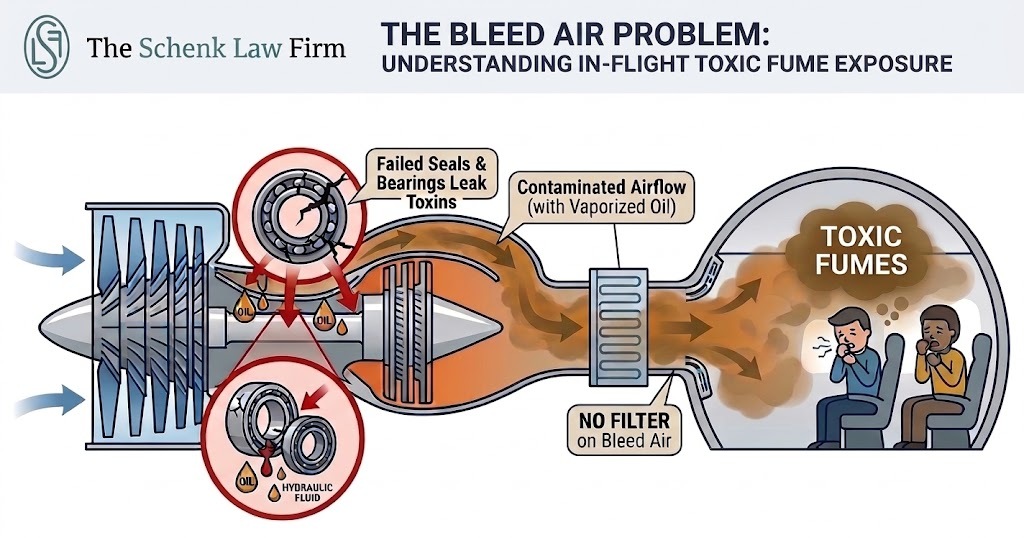
Toxic fumes on airplanes are vaporized engine oil or hydraulic fluid that leak into the cabin through the bleed air system. They contain neurotoxins like tricresyl phosphate (TCP) and can cause both immediate and long-term injury. For a full definition and the mechanical breakdown of how these events occur, see our guide on what is a fume event on an airplane. This article focuses on the injuries, the legal path forward, and what an Aerotoxic Syndrome Lawsuit can recover.
Why Are Toxic Fumes Leaking Into Airplanes?
The reason toxic fumes are leaking into airplanes traces back to the bleed air system, which pressurizes nearly every commercial jet except the Boeing 787. When engine seals wear, APUs are over-serviced, or hydraulic lines leak, contaminated air reaches the cabin with no filter in between.
Airbus A320-family aircraft account for about 61% of reported toxic fumes airplanes incidents and seven times the rate of the Boeing 737, according to CBS News reporting.
The technical failures are well-known. The liability question is whether airlines and manufacturers did enough to protect people onboard.
Symptoms of Toxic Fume Exposure After Flying
Exposure to toxic cabin air produces a signature pattern that often begins during descent and intensifies after landing. Recognizing symptoms early protects both your health and your legal claim. Many passengers dismiss the first signs as dehydration or jet lag, and that delay weakens the medical record an attorney needs.
Dizziness After Flying and Short-Term Symptoms
Dizziness after flying is the single most common sign of exposure to toxic cabin air. Other short-term symptoms include headache, nausea, blurred vision, tingling, difficulty concentrating, and a burning sensation in the throat or eyes. These symptoms can last days or weeks and typically worsen with repeated exposure. If you experienced any of these after a flight where you noticed an oily or chemical smell, see a doctor within 48 hours.
Respiratory and Long-Term Neurological Damage
Repeated exposure produces chronic respiratory and neurological damage. Research increasingly recognizes that inhalation of hydraulic fluid and engine oil fumes has been linked to long-term neurological symptoms: memory loss, tremors, mood changes, sleep disruption, chemical sensitivity, and in some cases, motor neuron disease. JetBlue flight attendant Florence Chesson was diagnosed with a traumatic brain injury and permanent nerve damage after a single fume event. Her neurologist compared the damage to the repetitive head trauma seen in professional football players.
What Is Aerotoxic Syndrome
Aerotoxic syndrome is the diagnosed cluster of chronic neurological, respiratory, and cognitive symptoms linked to repeated exposure to contaminated bleed air. A 2025 peer-reviewed study of pilot cognitive performance found deficits resembling those seen in groups exposed to organophosphate pesticides. In December 2025, France’s Toulon Judicial Court recognized aerotoxic syndrome as occupationally caused in an individual workers’ compensation case, the first such recognition by any court worldwide. For the full clinical breakdown, see our guide on what is aerotoxic syndrome.
Real Cases: What Toxic Fumes Were on These Airplanes
The toxic fumes airplanes release during these incidents are now driving major litigation. Recent cases show how toxic fumes are leaking into airplanes across every major carrier, and what were the toxic fumes on the airplane became the central question in each of the four matters below.
- Swiss A220 fatality (December 2024): A 23-year-old flight attendant on Swiss flight LX1885 died of hypoxic brain damage after smoke filled the cabin of an Airbus A220-300. Investigators identified damage to the Pratt & Whitney PW1500G engine’s fan drive gear system, per a Flight Global investigation report.
- $40 million lawsuit against Boeing (December 2025): A law professor filed the first major passenger-led Aerotoxic Syndrome Lawsuit in the U.S. after a “dirty socks” odor filled a Delta 737 cabin during a 45-minute tarmac delay, alleging permanent brain and respiratory injury.
- $30 million lawsuit against Airbus (January 2026): A veteran American Airlines flight attendant filed a product-liability claim for permanent neurological damage from a 2024 fume event at Phoenix Sky Harbor.
- JetBlue pilot award (March 2020): An Oregon captain secured a workers’ compensation award for toxic encephalopathy and permanent brain injury after a 2017 fume event on an Airbus A320. The Oregon Workers’ Compensation Board found that JetBlue had prioritized flight schedules over worker safety.
Your Legal Rights After Airplane Toxic Fume Exposure
Passengers and crew injured by airplane toxic fumes have clear legal rights, but the path to compensation depends on your role on the aircraft. Passengers sue directly. Flight crew face a strategic decision between workers’ comp and a third-party civil lawsuit that often determines the size of the recovery.
Can Passengers Sue the Airline or Manufacturer?
Yes. Passengers injured by toxic fumes leaking into airplanes can sue the airline for negligence, the aircraft manufacturer for product liability, and the engine manufacturer for defective design. The December 2025 $40 million claim against Boeing is the first major passenger-led case to reach federal court in the U.S. and signals that courts will entertain passenger claims where the chemistry, timeline, and medical diagnosis are well documented.
Flight Crew: Workers’ Comp vs. Civil Lawsuit
Flight crew face a critical choice when toxic fumes are leaking into airplanes they work. Workers’ compensation is faster and does not require proving fault, but it caps recovery and is generally the exclusive remedy against the employer-airline, with narrow exceptions. A civil third-party lawsuit against the aircraft or engine manufacturer allows recovery for pain and suffering, loss of career earnings, and punitive damages. Most successful crew recoveries combine a workers’ comp claim with a separate civil suit. An experienced personal injury lawyer should evaluate both tracks before anything is filed.
What You Need to Prove
A successful Aerotoxic Syndrome Lawsuit rests on three things: documented exposure (flight records, maintenance logs, or crew reports confirming what were the toxic fumes on the airplane), a diagnosed injury (neurological, respiratory, or cognitive), and expert medical testimony linking the exposure to the injury. Contemporaneous documentation strengthens every element.
What Compensation Can You Claim
Compensation in a toxic fume case typically covers four categories.
- Medical expenses: past and future costs for neurological testing, pulmonology, and ongoing treatment. Cognitive rehabilitation alone can run $50,000 to $200,000.
- Lost income and career loss: pilots and cabin crew whose medical certificates are revoked can recover $200,000 to $400,000 or more in diminished earning capacity.
- Pain and suffering: chronic headaches, cognitive decline, and reduced quality of life. Often the largest share of a verdict.
- Punitive damages: awarded when airlines or manufacturers knew about the defect and failed to act. Internal memos about known seal failures can unlock this category.
Statute of Limitations: Don’t Wait to File
The deadline to file a fume exposure claim is tight and varies by state, defendant type, and whether the injury presented immediately or developed over time. Missing the deadline ends the case regardless of merit.
What to Do If You Were Exposed: Immediate Steps
Fast action protects both your health and your claim. Take these four steps in order as soon as you suspect airplane toxic fumes exposure on a flight.
- Document the incident: record the flight number, date, seat or crew position, time and duration of any odor, and the symptoms you experienced.
- Seek medical evaluation: request blood and urine testing for organophosphate exposure and neurological screening within 48 hours, and get everything in writing.
- Report the event: file a report with the airline in writing and separately report to the FAA under the 2024 Reauthorization Act and NASA’s Aviation Safety Reporting System.
- Contact an attorney before the airline does: never give a recorded statement to the airline or its insurer without legal representation. Airlines move quickly to minimize fume event claims.
How The Schenk Law Firm Can Help
The Schenk Law Firm has represented injured clients since 1979 and recovered more than $25 billion. Cases involving toxic fumes in airplanes require medical, chemical, and aviation expertise few firms can assemble. We combine that specialized experience with the courtroom resources to take on Boeing, Airbus, Pratt & Whitney, and the major carriers.
What We Bring to Your Case
We handle every aspect of a toxic fume case in-house: independent toxicology testing for organophosphate exposure, neurological and pulmonology evaluations, aviation experts to reconstruct the event, and trial-ready litigators willing to take cases to verdict when insurers will not pay fairly.
What Happens When You Contact Us
We review your flight records, medical history, and details of the toxic fumes in airplanes exposure in a free consultation. If we take the case, we work on contingency, meaning you pay nothing unless we recover compensation on your behalf. We then order independent evaluations, identify every responsible party, and file suit within your statutory deadlines.
Start Your Free Case Evaluation
If you or a loved one experienced toxic fumes leaking into airplanes during a flight, the window to protect your rights is shorter than most people realize. Contact us today for a free, confidential case evaluation. Our San Diego-based team handles Aerotoxic Syndrome Lawsuit claims nationwide.
Frequently Asked Questions
Can I Sue an Airline for Toxic Fume Exposure?
Yes. Passengers can sue the airline for negligence, the aircraft manufacturer for product liability, and the engine manufacturer for defective design. Crew may pursue workers’ comp plus a civil third-party claim, which usually yields a higher recovery.
How Much Is My Fume Exposure Case Worth?
Case value depends on severity of injury, career impact, and evidence of corporate knowledge.
How Long Do I Have to File a Lawsuit After a Fume Event?
Most states allow two to four years from the date an injured person knew or should have reasonably known their injuries were caused by the incident in question. Speak with an attorney quickly.
Who Is Responsible for Cabin Air Contamination?
Responsibility for cabin air contamination can rest with the airline (for negligent maintenance or failure to respond), the aircraft manufacturer (for defective bleed air design), and the engine or engine component manufacturers (for faulty seals or bearings). Most successful cases name all potential defendants.
What Are the Symptoms of Aerotoxic Syndrome?
Symptoms include dizziness, headaches, nausea, blurred vision, tingling, memory loss, tremors, chronic fatigue, and mood changes. Severe cases can produce permanent brain damage.
Are Toxic Fumes Leaking Into Airplanes Common?
Yes, toxic fumes are leaking into airplanes at a rising rate. FAA records show at least three fume events per day on U.S. flights, Airbus A320 aircraft account for about 61% of reported incidents, and reports have increased nearly nine-fold between 2014 and 2024.
Do I Need a Lawyer for a Fume Event Claim?
Yes. Airlines and manufacturers move quickly to settle toxic fumes airplanes claims for minimal amounts or deny them outright. An experienced aerotoxic attorney preserves evidence, coordinates independent medical evaluations, identifies all liable parties, and negotiates from a position of strength. Most firms handling these cases work on contingency, meaning no out-of-pocket cost to you.
